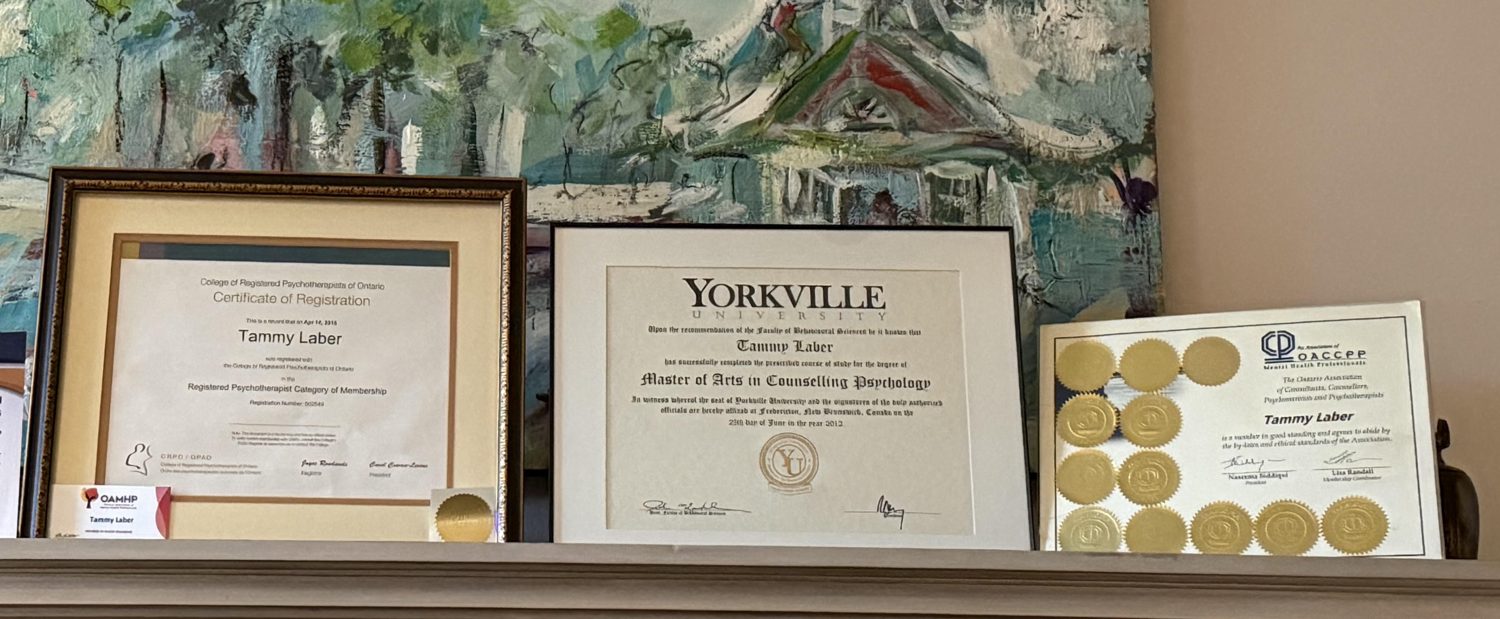
What I bring into the room
I have not only read about most of this. I have lived a fair amount of it.
An interfaith marriage, an adoption, and the grief that follows a divorce. Things clients bring her that she has been through herself.
Training tells you what usually happens. Having been through something yourself tells you how it actually feels at two in the morning. I have both, and I think the second one is why people relax in my office faster than they expect to.
Two faiths under one roof
My own marriage was an interfaith one. I remember the first few Decembers, working out what we did about Christmas and Hanukkah, whose family expected what, and which traditions were ours rather than inherited. We got there, and eventually we held both.
So when a couple sits in front of me negotiating a wedding ceremony, a baptism, a circumcision, religious schooling or how the children will be raised, I am not working from a textbook. I have worked with Christian and Muslim couples, Muslim and Hindu couples, and clients from Orthodox Jewish, Catholic, Hindu, Muslim and atheist backgrounds.
More than one way to build a family
I was adopted, and raised in an Eastern European Jewish family. As an adult I found my biological mother and built a relationship with her, so I now have ties to two family histories at once. I have never been able to assume there is only one shape a family comes in.
That matters for couples trying to build one. I have sat with people through long fertility journeys, through miscarriage, through the strain that clinic appointments and disappointment put on a relationship, and through the decision that a good life can still be had without children. The relationship is what I am protecting while all that is going on.
The end of a marriage, and the grief nobody names
I have counselled people through the death of a parent, a grandparent, a fiancé. But the grief I see most often in this practice is the one that follows a separation or a divorce, and it is the one people are least likely to call grief. Nobody sends a card. You are expected to be fine, or relieved, and often you are neither. That is real loss and it deserves the same room.