01
Engaged, with a date set
The most common reason people find this page, and the easiest time to do the work, provided you start early enough to talk properly.

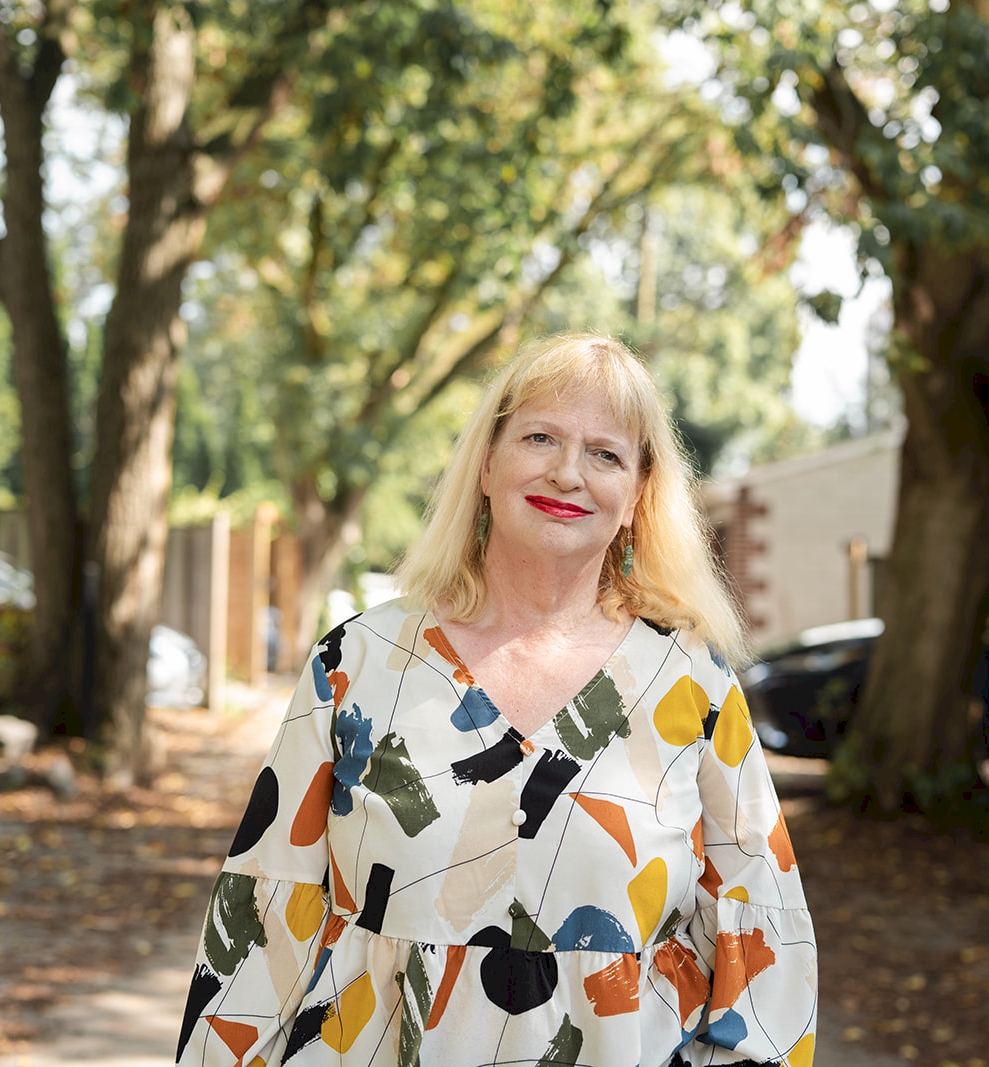
Most couples who come to me before a wedding are doing perfectly well. They have simply never sat down and worked out how they will handle money and housework, or even whose family gets Christmas. Those conversations are much easier to have now than in five years.
Tammy Laber, Registered Psychotherapist, in Danforth Village and online across Ontario. Call or text (416) 420-0440.
Charged by the hour, not per person
Fewer or more, depending on you
Not the month before the wedding
Some churches ask for it


Couples rarely arrive with a problem. They arrive having never discussed bank accounts, or who does the laundry, or what happens when a baby comes and one of them is expected to stop working.
When a younger couple comes to me before a first marriage, a good deal of the work is not repair at all. It is simply putting things on the table that neither of them has thought about yet.
They have not decided whether they will have joint accounts or separate ones. They have no system for housework. They have not talked about who would stay home if there were children, or whether there would be a nanny, or what that would cost. None of that is a problem yet. It becomes one when the assumptions turn out not to match.
Counselling before a wedding is not a sign that something is wrong with your relationship. It is a structured way to find out what you each already believe about how this is going to work.
If the two of you are serious about each other, you are far enough along to do this work. I see couples of all kinds, same-sex couples included.
The most common reason people find this page, and the easiest time to do the work, provided you start early enough to talk properly.
You are fairly sure, and you would rather know what you are walking into before there is a ring and a deposit on a venue.
The point at which the practical questions stop being hypothetical. A very good moment to have those conversations.
Some habits have set, and you have a much clearer sense of what is worth sorting out.
You have done this before, and you know more now about what you want and what you will not repeat.
Some couples come to me while they work out whether this has a future at all. I have had couples in their twenties who are not even living together yet.
Plenty of couples never marry. You are still building a life together and the conversations are exactly the same. How the law treats a long unmarried relationship is worth checking with a family lawyer, particularly once there are children.
Where the wedding, the holidays, the families and the raising of any children all have to be worked out rather than assumed.
Whatever you bring gets first priority. But if you have not raised all five by the time we are near the end, I will raise them myself.
Which of them dominates changes from couple to couple, and so does the order. The five areas themselves do not.
Take in-laws. If you do not raise it, and it turns out one of you has a mother who involves herself in everything and has already caused arguments, that is not something I want to discover in your second year of marriage. So I ask.
On money I can get quite specific if you want to. Debt, what each of you earns, what you expect to share, how you would handle a large purchase. I have a long-standing personal interest in financial planning and investing and I am happy to talk it through, though I am a psychotherapist and not a financial adviser, and nothing I say should be construed as financial advice.
Beyond those five, anything you want to talk about is fair game. The five areas are the only thing I insist on.
What sits underneath all five is usually how the two of you handle a disagreement, and what makes each of you feel loved. Couples who have those two worked out tend to manage the rest.
Around ten sessions is typical, though that is a rough guide rather than a programme. Pre-marriage work rarely runs as long as marriage counselling, because you are not starting with years of accumulated problems.

There is no fixed curriculum. Whatever the two of you arrive with goes first, and we work on it properly. Alongside that I make sure we have covered the five areas before we finish, because the point of doing this early is to catch the things you have not thought to worry about.
Beyond that it depends on your situation. With one couple most of the time may go on money, because one of them came in with debt the other only half knew about. With another it may be a wedding neither set of parents can agree on, where the real work is how the two of them hold a boundary together.
It starts with a free 15-minute phone call, so you can hear how I work before committing to anything. After that each of you completes a short intake form separately, so I hear what each of you thinks matters without the other reading over your shoulder.
People find me in different ways. Many of my referrals come from doctors, and some from lawyers, alongside people sent by friends and family who have worked with me before. Clergy referrals are rare, though I am open to them and I am very respectful of religion.
Blended families are the exception on length. A second marriage bringing children, former partners and two sets of household rules together has more to work through, and the work often takes longer.
Usually one of you books this and the other agrees to come. That is normal, and it does not stop the work landing. I give the less keen one plenty of room to say why they were not sure about it.
What I watch for is one of you not having registered how much something matters to the other. That is rarely indifference. Often it is that the thing has never been said plainly, because it has only ever come out sideways or in an argument. Getting it said properly, in a room where neither of you has to shout to be heard, is a good deal of what this is for.
One couple came to me under a good deal of stress, and from what they were describing I thought one of them might have ADHD. I asked whether he would be comfortable with me running a screening. He was, and I formed a diagnostic impression which was then confirmed by a doctor. He was treated for it, and alongside that we worked on some practical ways of managing it day to day. Much of what the two of them had been arguing about turned out not to be about each other at all.
That is one couple rather than a pattern, and I am a psychotherapist rather than a physician, so anything of that sort goes to a doctor to confirm and to treat. But it surfaced because the two of them sat down and went through all of this before the wedding instead of after it.
Earlier than most couples think. I would like you to start when you are thinking about living together. If you are serious enough to be getting engaged, you are serious enough to do pre-marriage counselling.
There is nothing wrong with booking a few months before the wedding, but the last stretch before a wedding is a busy, expensive and emotional time, and it is a poor moment to discover you disagree about something significant.
Is it required? Not in Ontario. You do not need counselling or a preparation course to get a marriage licence or to marry legally here. Some religious communities do require it, including the Roman Catholic Archdiocese of Toronto, which asks couples to complete a marriage preparation course before a church wedding. Individual ministers and officiants in other denominations often ask for something similar, so it is worth checking with whoever is marrying you.

A second marriage with children from a first has more in the room, and more of it already has a history.
You are not only working out how the two of you will operate. You are working out how the children fit, and what each of you expects of the other as a stepparent. What the relationship with a former partner looks like. Whose house rules apply. And how money works when there are obligations that predate the marriage.
Those conversations are harder than the equivalent ones in a first marriage, because the answers affect people who are not in the room and did not choose any of this.
I have worked with a number of blended families. I also have some personal experience with being a stepparent. If that is your situation, say so on the first call and we will plan for a longer piece of work.
Couples from different faiths or cultures usually arrive having agreed on the big principle and none of the specifics.

What I ask about is practical. How the wedding is being done, and who is officiating. Whose family expects what, and what happens if those expectations conflict. How holidays will work. If you want children, how they will be raised, and whether the two of you have ever said the words out loud to each other.
I have had a couple, one Hindu and one Christian, where he planned to travel to India over Christmas and she was upset that he would be away for it. Neither of them was wrong. They had simply never talked about it.
Conversion comes up sometimes, less often than people assume. If one of you wants to convert, that is your decision to make, and I am not going to push you either way.
What I am listening for is whether you are agreeing to this freely, or agreeing to keep the peace and storing up resentment.
It is still common for a family to want a signed undertaking about how children will be raised. If that is fine with you, it is fine with me. If one of you is quietly broken up about it, that needs talking about now rather than later.
I have seen it go wrong even where a couple did agree. One couple discussed religion carefully before they married and settled it between them. Then a child arrived, and one side of the family applied unrelenting pressure about how the child was being raised, and the marriage did not survive it. They had talked about it. But an agreement about a child you do not have yet is not the same thing as a child in the house, and it was much harder than either of them expected.
The point is not to make sure the wedding happens. It is to help you understand what you are agreeing to, and to make the decision with your eyes open.
This is not work designed to put a wedding in doubt. But getting you married is not the goal I hold in the room either. The goal is that you both understand the relationship you are in, and how to help it grow and thrive.
One couple went a different way. The husband-to-be came in some months before the wedding, and in working through it he recognised that the two of them were already living more like housemates than partners. They were not spending real time together, and had not been for a while. He decided that formalising it was not something he wanted to do, and he called the wedding off. It was difficult, and it was expensive.
That is uncommon, and I am not suggesting it is where this ends up. But I would rather you found out something important in my office than in your fourth year of marriage.
Not sure whether it is too early to be doing this?
It almost certainly is not. Call and ask, and I will tell you honestly whether I think it is worth your while yet.
I charge for my time, not per person. Whether I am seeing one of you or the two of you together, it is $180 an hour.
Sessions are at my office on Dingwall Avenue in Danforth Village, about an eight-minute walk from Pape station, or online by Zoom or Doxy.me anywhere in Ontario. The two of you can join an online session from different locations if that is easier.
My receipts carry my name, address, phone number, my Registered Psychotherapist designation and my CRPO registration number. That is what most insurers ask for. Whether your plan reimburses you depends on your employer and your policy, so it is worth checking before your first appointment.
Pre-marriage counselling is not a course you complete and never think about again. What you are really leaving with is a way of talking to each other and some idea of where your own sore spots are.
What is common is a long stretch where things are genuinely good between the two of you, then something harder a year or two later, and wanting to pick the work up again.
That is not a failure of the first piece of work. Knowing that it is possible for things to be good between you is worth a great deal when things get hard again, because you know what you are aiming at.
I do not make you happy. We co-create happiness, and co-create is a good word.
No. You do not need counselling or a marriage preparation course to get a marriage licence or to marry legally in Ontario. Some religious communities do require it, including the Roman Catholic Archdiocese of Toronto for a church wedding, and individual ministers in other denominations often ask for something similar. Check with whoever is marrying you.
Earlier than most couples think. The moment you are seriously considering living together is a good time to begin. If you are serious enough to be getting engaged, you are serious enough to do this. The month before the wedding is a busy and expensive time and a poor moment to discover you disagree about something significant.
Around ten is typical, but it depends on you and what you want to cover. It usually runs shorter than marriage counselling, because you are not starting with years of accumulated problems. Blended families often take longer.
Whatever you bring comes first. Alongside that I make sure we cover five areas before we finish, which are sex and intimacy, money, parenting, housework, and in-laws. Beyond those, anything you want to discuss is fair game.
Yes, and that is the best time to do it. Most of what goes wrong in a marriage later is something neither of you thought to ask about early on. Counselling before a wedding is not a sign something is wrong. It is a structured way to find out what you each already assume.
$180 an hour. That is the same rate whether I see one of you or both of you together, because I charge for my time rather than per person. There is no couples surcharge.
No. I see couples who are engaged, couples thinking about it, couples about to move in together or already living together, couples in a second marriage, and couples who have been together for years with no intention of marrying at all. I also see couples who are dating and working out whether the relationship has a future.
Yes, on request, if a minister or officiant asks for confirmation that you attended. Nobody has asked me for one yet, but I have no objection to providing it for sessions you have genuinely done.
My office is at 36 Dingwall Avenue in Danforth Village, in east Toronto, about an eight-minute walk from Pape subway station, with free street parking nearby. I also see couples online by Zoom or Doxy.me anywhere in Ontario, and the two of you can join from different locations if that is easier.
Your name, your number, and the kind of counselling you are looking for. I will call you back. I am usually reachable between eight in the morning and eight at night, and I will get back to you as soon as I am free.
If I do not pick up, it is because I am with a client, and that person has my full attention while they are in the room, exactly as you will when it is your turn.